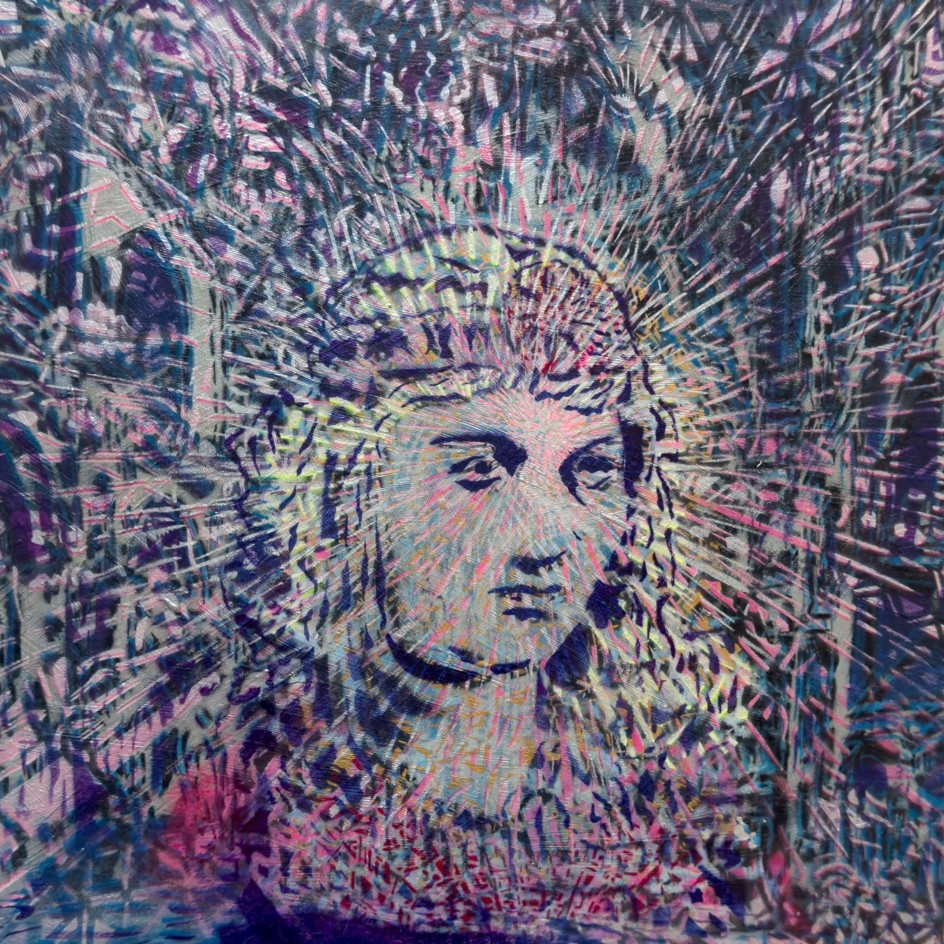
Scott Williams & Jacques Villeglé
Parallel Visions
March 12 - May 2, 2026
Opening reception Thursday, March 12, 6-8PM
-

Artworks by Scott Williams and Jacques Villeglé
-

Artworks by Jacques Villeglé
-

Artworks by Jacques Villegle and Scott Williams
-

Artworks by Scott Williams and Jacques Villeglé & Scott Williams
-

Artworks by Scott Williams
-

SCOTT WILLIAMS
-

JACQUES VILLEGLÉ
-

SCOTT WILLIAMS
-

JACQUES VILLEGLÉ
-

SCOTT WILLIAMS
-

SCOTT WILLIAMS
-

JACQUES VILLEGLÉ
-

SCOTT WILLIAMS
-

JACQUES VILLEGLÉ
-

SCOTT WILLIAMS
-

JACQUES VILLEGLÉ
-

SCOTT WILLIAMS
-

JACQUES VILLEGLÉ
-

SCOTT WILLIAMS
-

JACQUES VILLEGLÉ
-

SCOTT WILLIAMS
-

JACQUES VILLEGLÉ
-

SCOTT WILLIAMS
-

SCOTT WILLIAMS
-

JACQUES VILLEGLÉ
-

SCOTT WILLIAMS
-

SCOTT WILLIAMS
-

JACQUES VILLEGLÉ
-

SCOTT WILLIAMS
-

SCOTT WILLIAMS
-

JACQUES VILLEGLÉ
-

SCOTT WILLIAMS
-

JACQUES VILLEGLÉ
-

SCOTT WILLIAMS
-

JACQUES VILLEGLÉ
-

SCOTT WILLIAMS
-

SCOTT WILLIAMS
-

JACQUES VILLEGLÉ
-

SCOTT WILLIAMS
-

JACQUES VILLEGLÉ
-

SCOTT WILLIAMS
-

SCOTT WILLIAMS

Summary
Modernism is pleased to present Scott WILLIAMS & Jacques VILLEGLÉ: Parallel Visions. Shown for the first time in tandem, this exhibition highlights a surprising kinship between these two pioneers of Street Art. Though separated by the Atlantic Ocean and the two decades between them, Scott Williams and Jacques Villeglé demonstrate a striking parallelism of practice.
In this exhibition, several large and important works from William’s oeuvre spanning 1986 to 2005 are paired with sizeable Villeglé masterpieces from the late 70s and 80s. Pieces by both artists display a prismatic explosion of color with mesmerizing fractal patterns and repeating imagery, much like a kaleidoscope. However, the visual similarity is only one of many points of resonance between the two artists.
Scott Williams [1956-2024] was born in Los Angeles, California and grew up in Santa Barabara. Williams studied art and anthropology at Santa Barbara City College, Cabrillo College and Sonoma State University. By age 23, he made his way to San Francisco. Shortly after, in the early 1980s, following a period of experimenting with Xerox machines, Williams began creating stencils by hand with imagery he collected from magazines and used them to paint murals. Williams developed a unique process of redacting with an X-Acto knife the darkest values in the images of his found material. He would then spray paint through the stencil and repeat this process to layer the images into a composite mural. While Williams’s process of appropriation follows in the tradition of pop artists like Robert Rauschenberg and Andy Warhol, Williams is distinguished from his artistic forbearers by the fact that his art was exhibited publicly, often on alley walls, in stores and restaurants, on furniture, and even on motorcycles and cars.
The murals from this early period were primarily outdoors, and thus not much work from this period remains. In 2024 it was reported only one Williams mural remained in San Francisco. Despite the relative ephemerality of his murals, Williams was regarded as leader of the Mission School and earned the epithet “godfather of stencil art in San Francisco.” By the late 1990s, Williams began to produce smaller works, utilizing water-based airbrush due to the negative health consequences from spray paint. As the years progressed and as the scale of the work decreased, Williams began to show indoors more frequently, painting commercial venues and exhibiting in traditional format galleries.
Jacques Villeglé [1926-2022] was born in Brittany, France. He spent his late adolescence as an architectural apprentice in Nantes during the German occupation. At age 18, Villeglé moved to Paris where he took an interest in the avant-garde. By age 23, Villeglé began collecting advertising material he scavenged from around the city, tearing posters and flyers from the streets of Paris. This material became the medium with which Villeglé would create the décollage that defined his eight-decade career. Villeglé’s prescience and influence would position him as key figure in the New Realism movement and eventually earn him the title “Father of Street Art.”
The parallels between the lives and work of Scott Williams and Jacques Villeglé are remarkable. Both artists relocated to major cultural hubs in their youth and at 23 years old both began working with their unique artistic processes they became celebrated for. While their bodies of work share several perceptible similarities (like the use of layering, color, text, the presence of portraits, pop culture iconography and rough edges at the perimeter of their compositions), these visual resemblances are of the least interesting. Both Williams and Villeglé are not only artists, but archivists. To create their art, it was essential to amass a large collection of found material, and with multidecade careers this collection precipitated an archive, and their art, a visual record of the times. As a result, both Williams’s and Villeglé’s oeuvres feature sociopolitical symbology, though Williams was markedly more political in his work than Villeglé. But both artists remain quite anarchist in their practice as necessitated by their medium. Williams was called the “stencil pirate” and Villeglé the “aristocratic scavenger.” Nevertheless, both bodies of work retain a level of anonymity. Aaron Noble, co-founder of the Clarion Alley Project, wrote that Williams work maintains an “ambiguous authorial tone.” Jacques Villeglé often did not sign his work and referred to himself as the Lacéré Anonyme (Anonymous Lacerator). Although both bodies of work were informed by their respective cities, they are not autobiographical. In terms of art history, both artists’ practices of utilizing found material emanate from the Cubist collages of Pablo Picasso and Georges Braque and the ready-mades of Marcel Duchamp.
While Villeglé took his art from the street and Williams brought his art to the streets (an amusing contrast), both artists transcended the ordinary classification of street artist and found warm reception in the formal art world, affirming their standing as important fine artists.
Scott Williams is the subject of Nick Gorski’s 1991 documentary Spray Paint. He was also one of the initial artists to paint San Francisco’s famed Clarion Alley. The Yerba Buena Center of the Arts, San Francisco commissioned a large installation by Williams in 2003. In the early 2000s he began producing hand-painted books which are now held in library collections around the world. In 2005, Williams received the Adeline Kent Award and a had a retrospective at the San Francisco Art Institute. Scott Williams is one of the subjects of the 2009 monograph Street Art San Francisco: Mission Muralismo published by Harry N. Abrams.
Jacques Villeglé’s work has been exhibited extensively in the United States and Europe and is the collections of many important museums worldwide including the Museum of Modern Art, New York; Museum of Contemporary Art, Los Angeles; Detroit Institute of Arts; Centre Georges Pompidou, Paris; Tate Gallery, London; Moderna Museet, Stockholm; and Musée d’Israël, Jerusalem. In 2008 a major retrospective of his works was exhibited at the Centre Georges Pompidou, Paris. In 2011 Modernism published Urbi et Orbi, the English translation of Villeglé’s 1959 theoretical writings. Major monograph Jacques Villeglé and the Streets of Paris, authored by Barnaby Conrad III, was published in 2022, also by Modernism.