CHRONOTOPE
GROUP EXHIBITION
November 12, 2026 – January 29, 2027
Opening Reception November 12, 6-8PM
-

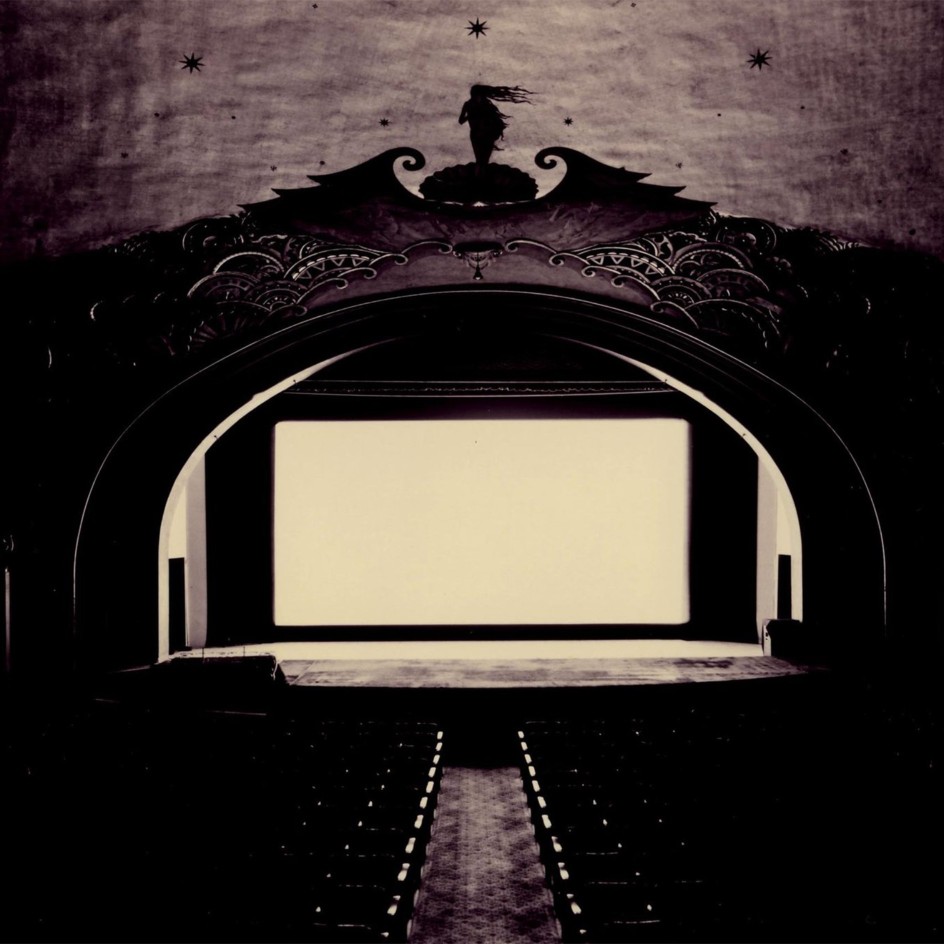
Hiroshi SUGIMOTO
-

Lauren DICIOCCIO
-

Jacques VILLEGLÉ [1926-2022]
-

Peter ALEXANDER [1939-2020]
-

Pierre BURAGLIO
-

Michael EASTMAN
-

Jacques VILLEGLÉ [1926-2022]
-

Tanja RECTOR
-

John REGISTER [1939-1996]
-

Jacques VILLEGLÉ [1926-2022]
-

Markus BAENZIGER
-

Jacques VILLEGLÉ [1926-2022]
-

François KOLLAR
-

Jacques VILLEGLÉ [1926-2022]
-

Ward SCHUMAKER
-

Jacques VILLEGLÉ [1926-2022]
-

Louis STETTNER [1922-2016]
-

Jacques VILLEGLÉ [1926-2022]
-

Max YAVNO [1911-1985]
-

Max YAVNO [1911-1985]
-

Jacques VILLEGLÉ [1926-2022]
-

Ilond TANSOVSKAYA
-

Jacques VILLEGLÉ [1926-2022]

Summary
GROUP EXHIBITION INCLUDING: PETER ALEXANDER | MARKUS BAENZIGER | PIERRE BURAGLI | LAUREN DICIOCCIO | MICHAEL EASTMAN | JONATHON KEATS | FRANÇOIS KOLLAR | TANJA RECTOR | JOHN REGISTER | WARD SCHUMAKER | LOUIS STETTNER | HIROSHI SUGIMOTO | ILOND TANSOVSKAYA | JACQUES VILLEGLÉ | MAX YAVNO
Modernism is pleased to present Chronotope, a group exhibition featuring 23 works by 14 artists across painting, photography, sculpture, printmaking and décollage.
Meaning literally “time-space,” chronotope is a term introduced by Russian literary theorist Mikhail Bakhtin [1895–1975] to describe the intrinsic connection between temporal and spatial relationships. Developed in the intellectual aftermath of Russian Modernism and the avant-garde, the concept was influenced by Einstein’s theory of relativity and its understanding of time and space as inseparable dimensions. Bakhtin adapted this idea to literature, proposing that time becomes perceptible through space and that space, in turn, bears the evidence of time.
Chronotope extends this relationship to visual art, examining how artists capture time through images of places, objects and environments. Clocks, theaters, storefronts, streets and landscapes become symbols of both physical location and temporal experience.
Central to the exhibition is Hiroshi Sugimoto’s Avalon Theatre, Catalina (1993), from the artist’s celebrated Theaters series. To make these photographs, Sugimoto opened his camera’s shutter at the beginning of a film and closed it when the film ended, compressing the duration of an entire feature into a single exposure. The accumulated images disappear into the luminous white screen while the architecture of the theater remains visible around it. Time, ordinarily measured as a succession of images, is condensed into a single photograph and fixed within a specific architectural space.
A different convergence of time and place occurs in the décollages of Jacques Villeglé. Beginning in 1949, Villeglé systematically removed torn posters from the streets, preserving fragments of the urban environment as works of art. Rather than assigning conventional titles, he frequently identified the works by the locations and dates of their collection. The nine décollages in Chronotope span more than three decades and numerous sites across Paris, from Boulevard de la Bastille in 1960 to Rue de Rennes in 1992. Fragments of advertisements, typography and imagery accumulate on their surfaces, preserving traces of the changing visual culture of Paris. Place and date become inseparable from the object itself.
Time is made explicit in Lauren DiCioccio’s Clock (Quartz, Yellow) (2011), a functional clock rendered in cotton, felt and plastic sheeting. By transforming an ordinary instrument for measuring time through labor and material, DiCioccio gives physical form to something otherwise intangible. Ward Schumaker’s Count Me In (2025) similarly incorporates the visual language of numbers and counting, while Tanja Rector’s Memory 1, 2nd State (1996) approaches time through its residue: an indistinct image that suggests the instability of recollection.
Elsewhere in the exhibition, photography preserves places at particular moments. Louis Stettner’s Antique Store Front, rue Jacob Paris (1949) fixes a Paris storefront in time, while Max Yavno’s Premiere at Carthay Circle (1949) records the architecture and spectacle surrounding a Los Angeles movie premiere.
Landscape provides another register of temporal experience. John Register’s Study for Further Lane (1983), Peter Alexander’s L.A.X. XXIV (1989) and Pierre Buraglio’s Paysage (1990) locate the viewer within environments that are at once physical places and images suspended in time.
Presenting works made between 1932 and 2025, Chronotope considers time and place not as independent subjects but as conditions that continually define one another. Rather than presenting time as an abstract progression, the exhibition locates it in specific streets, buildings, objects and landscapes—places through which time is accumulated, remembered and revisited.